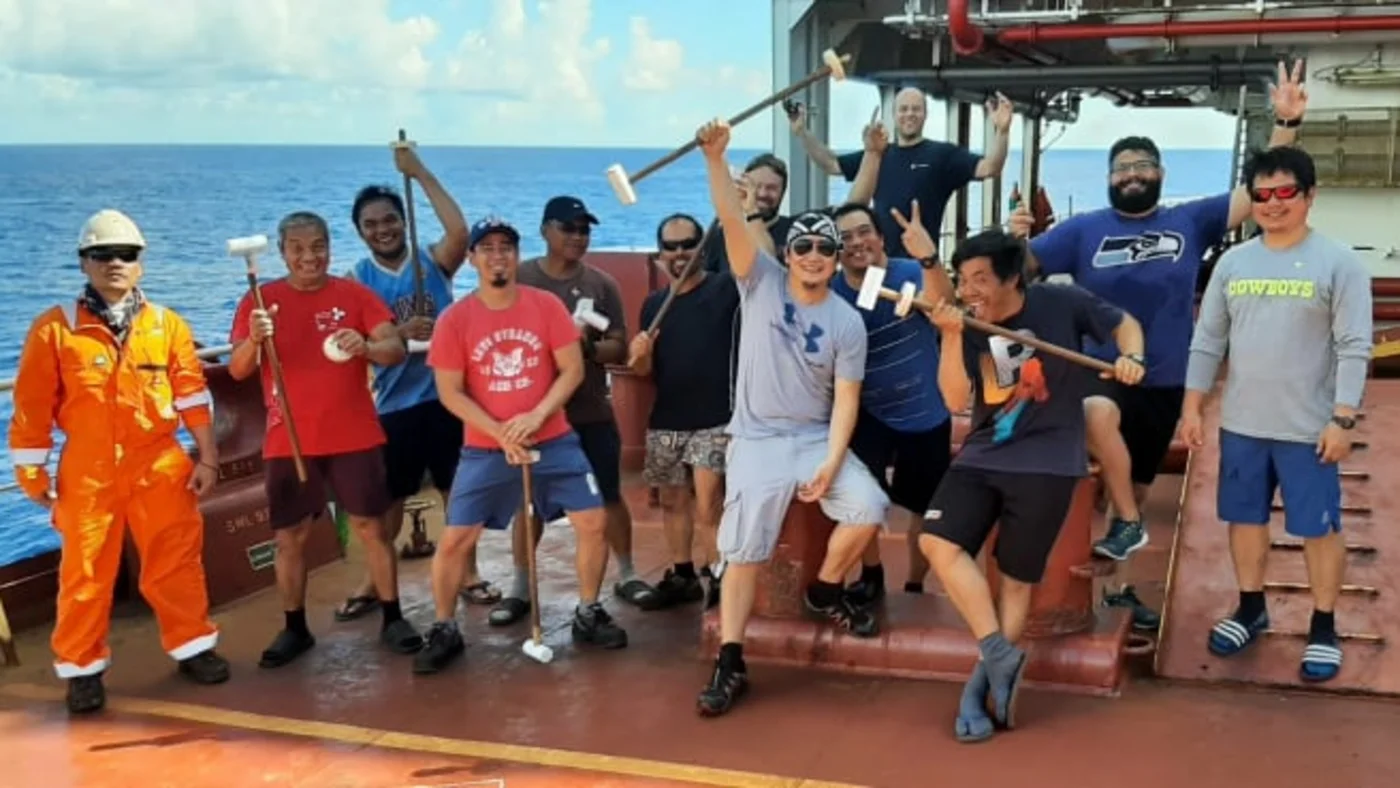
”When you are sailing on deep sea routes, you are governed by some very special conditions. The crew is on board for six months. That means it is very difficult to sign off the ship within that period if something urgent should happen at home. I have experienced that a man who lost his wife while we were in China could not get off the ship until we reached Canada. That is very tough, but unfortunately, it is one of the preconditions that we cannot change.
Conflicts between crew members can also occur because their chemistry does not match. That can be a problem difficult to solve when you are a small crew and cannot isolate people from each other. Then the only thing you can do is to try to make the working relationship bearable.
I have also experienced that the crew was dissatisfied with the food served on board. Something as basic as what we are eating is extremely important to the crew and can affect the whole atmosphere in a negative way. Of course, we should not eat caviar and shrimps every day, but the food is one of the highlights of the day, and it has to work. In this specific situation, I had a chat with the cook, and together we figured out how to do something different with what we had at our disposal”.
“
The management of the ship constantly has to focus on how we are treating our crew.
”Jørn Hovmand Larsen
”The management of the ship constantly has to focus on how we are treating our crew.
When I welcome crew members, I always put a lot of effort into getting them to understand how it is to sail with me as their captain. I demand that people are well behaved and doing their best.
The crew need to have trust in me and believe in what I am saying. I need to put actions behind my words. It is also important that the crew can depend on getting the resources they need to do their job. It is very important not to put people in situations that push them beyond their capacity.
I am always very aware of what I am asking from people and what I am offering them. If a job takes three people to do, then I would never ask only one person to do it”.
”It is important to tell the crew that they can trust the officers and the management. It can be difficult to get that message through to a crew that is used to a more hierarchical type of management culture.
I always make it very clear to my officers that I want a leadership style that focuses on treating each other with respect. If we do that, then we achieve more productivity and well-being.
I also make it very clear to everybody that my door is always open. That means if somebody has a problem with the first officer or the chief engineer, then they can always come to me and talk about it.
I am also very aware of keeping the crew well informed about our upcoming tasks. I find that it is a good investment to use some minutes gathering the crew and telling them what is going on and what we are expecting. As a captain, I want to be visible. My actions and decisions have to be transparent, and I choose always to be accessible”.
”I often experience that some of our crew members are holding back when it comes to talking about both work-related and personal issues. This is exactly why it is so important to tell my crew that my door is always open. It means that when a member of the crew appears in my cabin – because he wants to share an issue or problem with me – then I know that I have succeeded in establishing trust.”