As a seafarer, it is crucial that the job you are doing is following the safety requirements, that you can work well together with your colleagues, that you are alert, and that you can manage stressful situations. All these things are difficult – if not impossible – if you are not thriving mentally. Mental well-being is essential when you are working on a ship.
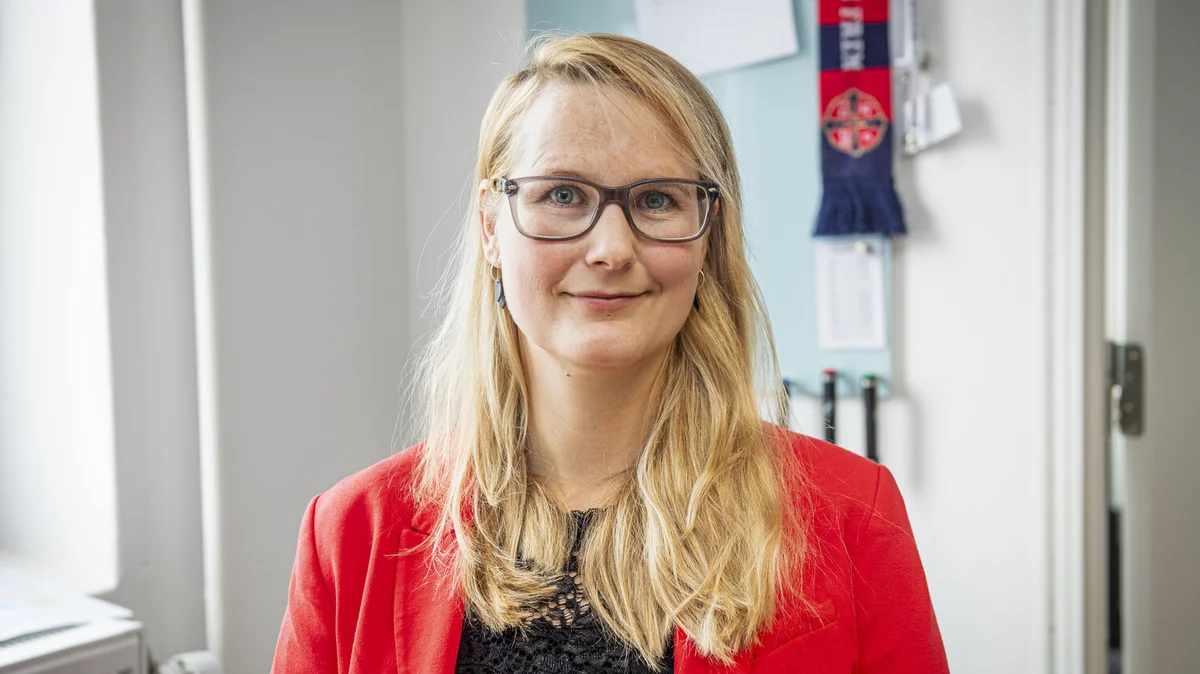
This is pointed out by Anna Bergmark, who is a consultant at SEA HEALTH & WELFARE and the project manager of the new ”Mental Health Toolbox”:
”Imbalance spreads and can affect the atmosphere of the whole crew and then lead to a work environment that feels insecure, unsafe, and which creates dangerous situations. An unhealthy atmosphere will spread all over the ship. If people are not thriving mentally, more accidents will happen. And that is very dangerous out at sea where help can be far away”.
“
Sharing your feelings, doesn't make you less of a man. It will eventually reflect on your mental health whether you realize it or not.
”Chief Officer on EMMA MAERSK Colin Dmello
It is important that seafarers are physically healthy, and it is just as important that there is a healthy psychological work environment on board. And in relation to the psychological work environment, there is room for improvement. A recent survey from Yale University and the English organization Sailors’ Society concludes that every fourth seafarer is depressed.
That shows a large need for this new “Mental Health Toolbox” that SEA HEALTH & WELFARE is developing in consultation with nine shipping companies. With the new toolbox, the management of a ship can strengthen the crew’s mental well-being and get help to start talking about some of these difficult mental health issues. Both things will help create a better psychological work environment on board.
The new “Mental Health Toolbox” will contain instructions and tools. For example, a tool to map if any of the crew members are mentally unbalanced. And there are different dialogue cards to get some of the difficult conversations started - for example, a dialogue about bullying and harassment. Also, the helpline that SEA HEALTH & WELFARE offers to seafarers will also handle inquiries related to depression, suicidal thoughts, loneliness and stress. A bit further down the road, the helpline will also offer online chat with a counsellor.
There are several ways of dealing with mental health problems and different approaches to how little or how much one wants to share with one’s colleagues.
”From my own experience as a seafarer, I know that some people have the approach that it is unnecessary to talk about how we are feeling and doing. Some people do not dare to say how they are doing because they are afraid of losing their job. And some have an approach that goes: what happens on the ship stays on the ship. All of these three approaches are manifesting a very unhealthy culture on board”, Anna Bergmark says.
The ship management is responsible for bringing the new “Mental Health Toolbox” into play and focusing on the crew’s mental well-being. It can be a challenge to spot mental issues and to point out exactly what is causing them. That is why the toolbox contains tools that help identify the problems that can affect the psychological work environment.
”One of the tools is called the LLS-Tool, which stands for Look, Listen and Sense. The LLS-tool - along with a handout for the crew member to fill in - will be useful for mapping out when any of the crew members have problems with their mental well-being. If the management becomes aware of any mental issues, they can make use of another initiative; the dialogue tool. The dialogue tool will help to get a conversation started with a crew member. It will help mapping how the crew member is supported in the best possible way,” Anna Bergmark explains and elaborates:
”The dialogue tool can also be used for getting one of those difficult conversations about bullying and harassment started. It has to be easy for the management to create and maintain good well-being on board. We know that a lot of officers want to work on strengthening the mental well-being on board, but they do not know how to approach it. With this new toolbox, they will get the help and support they need to get started”.
Seafarers with depression have twice the likelihood of getting a work injury
Seafarers with anxiety have increased likelihood of getting a work injury
Seafarers with suicidal thoughts have increased likelihood of a work injury but to a lesser degree than those with depression and/or anxiety
Seafarers with depression or anxiety have twice the likelihood of illness at work
Source:
Seafarer Mental Health Study
The ITF Seafarers’ Trust & Yale University: Rafael Y. Lefkowitz og Martin D. Slade
Final Report, October 2019