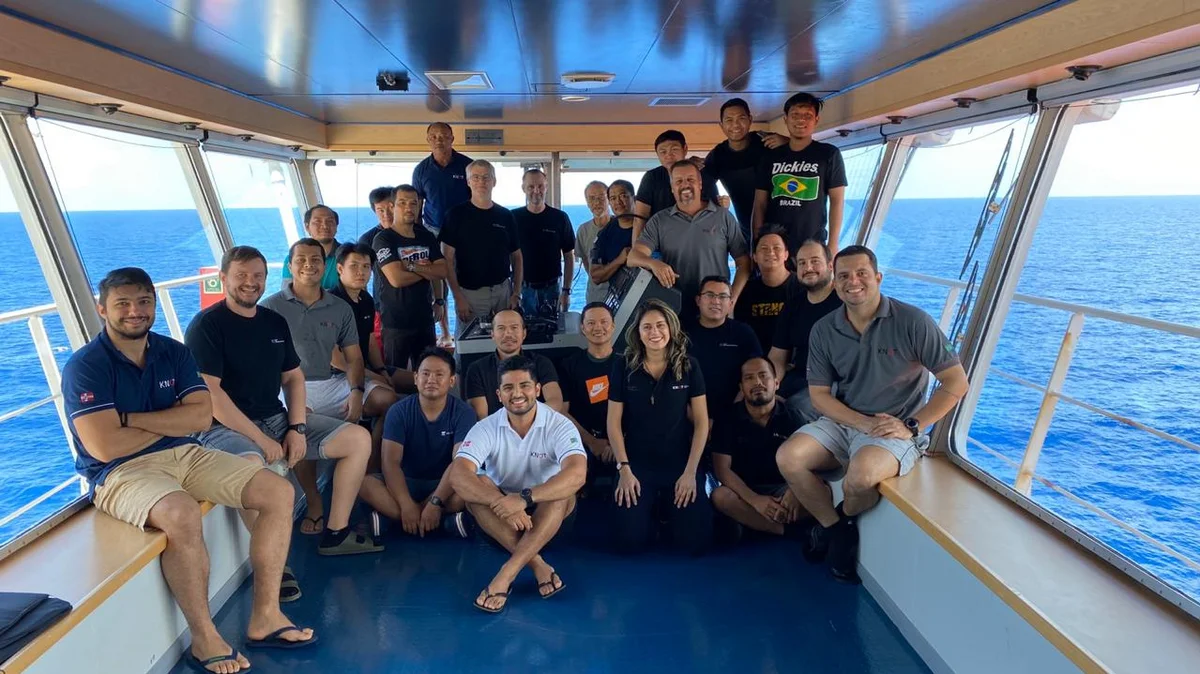
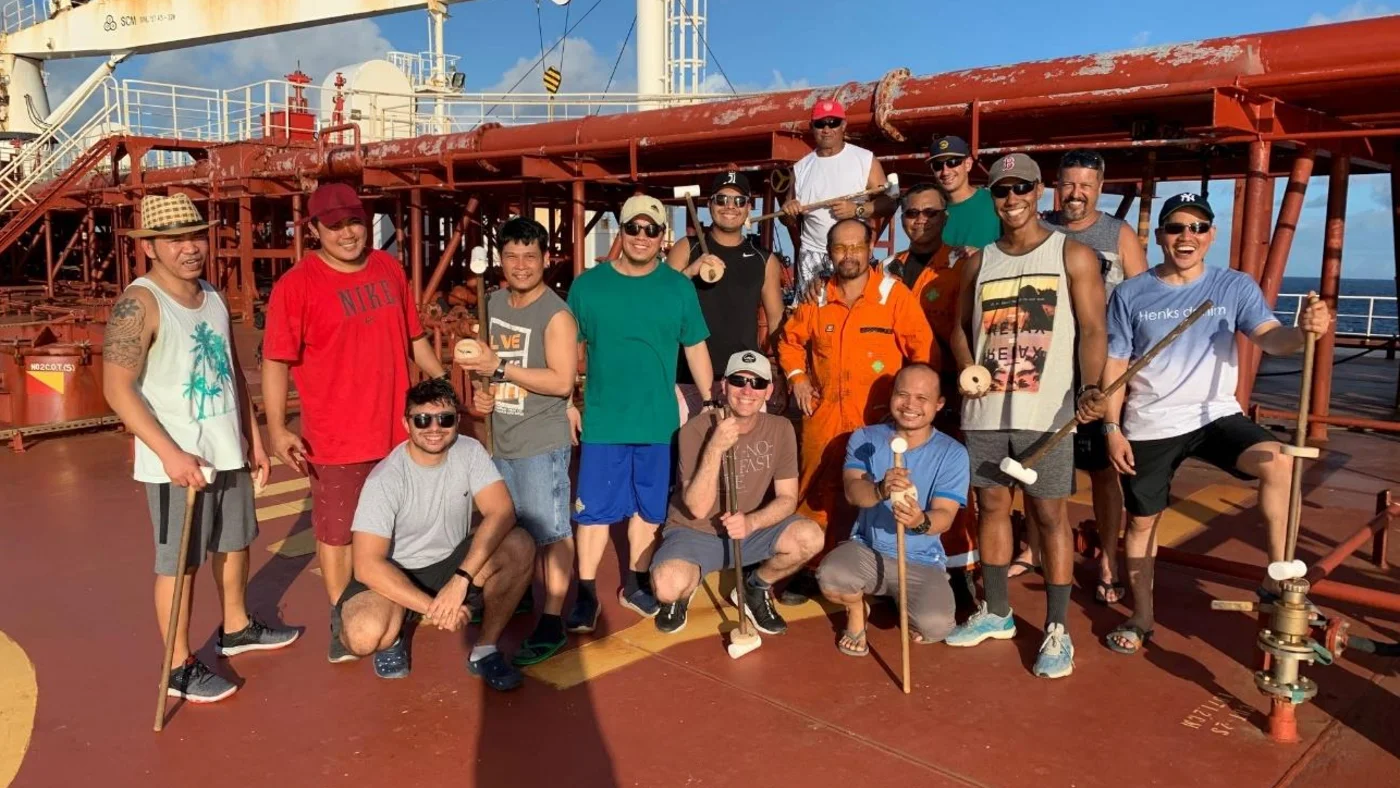
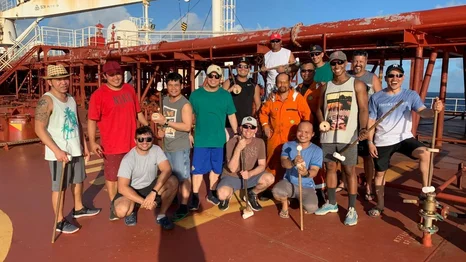
Laughing, cheering and hard-hitting of the puck can be heard when the crew aboard DAN SABIA engages in a game of golf on the deck armed with an ice hockey puck and croquet mallets. Laughter and friendly teasing carry on the sea air off the Brazilian coast, where the ship flying the Danishflag transports crude oil from oil rigs to mainland ports. Both speed and security requirements are high. The 25-people crew consists of people from Brazil, Poland,the Philippines, Denmark and the Faroe Islands, who are aboard the ship between 8 weeks and 6 months or, in the case of some, even longer, because the COVID-19 situation has made signing on and off difficult.
”The social activities make us feel less stressed and less worried about being far away from home for long periods at a time. The team spirit created by the social things we do together makes us a good work team,” says Brazilian Samara Bezerra who is 4th engineer.
Between the intense operations, the ship’s captain and crew prioritise time for activities such as darts, bingo, themed parties, communal training, swimming and their own special version of the contest X-factor. The crew’s strong commitment and strong sense of community have earned DAN SABIA the title ’Welfare ship of the year’ in 2020 – a new prize in SEA HEALTH & WELFARE initiated to bring focus on welfare and well-being at sea.
There are several reasons why the crew supports the social initiatives and wants to participate in activities after working hours instead of withdrawing to their cabins. Captain Jens Heri Bolstad Mortensen, who has sailed a year as captain of DAN SABIA, explains:
”If a crew is to thrive, cooperate and perform at a high level, it is important to prioritise the social life on board. In that way, they are prepared to work hard while also being able to enjoy each other’s company after a tough shift. It is not unheard of to swap Wednesday for Sunday aboard our ship. We seize the chance to do something together when it arises.”
At the ship’s monthly safety meeting, the captain asks the crew to come up with suggestions for activities that can be implemented on board.
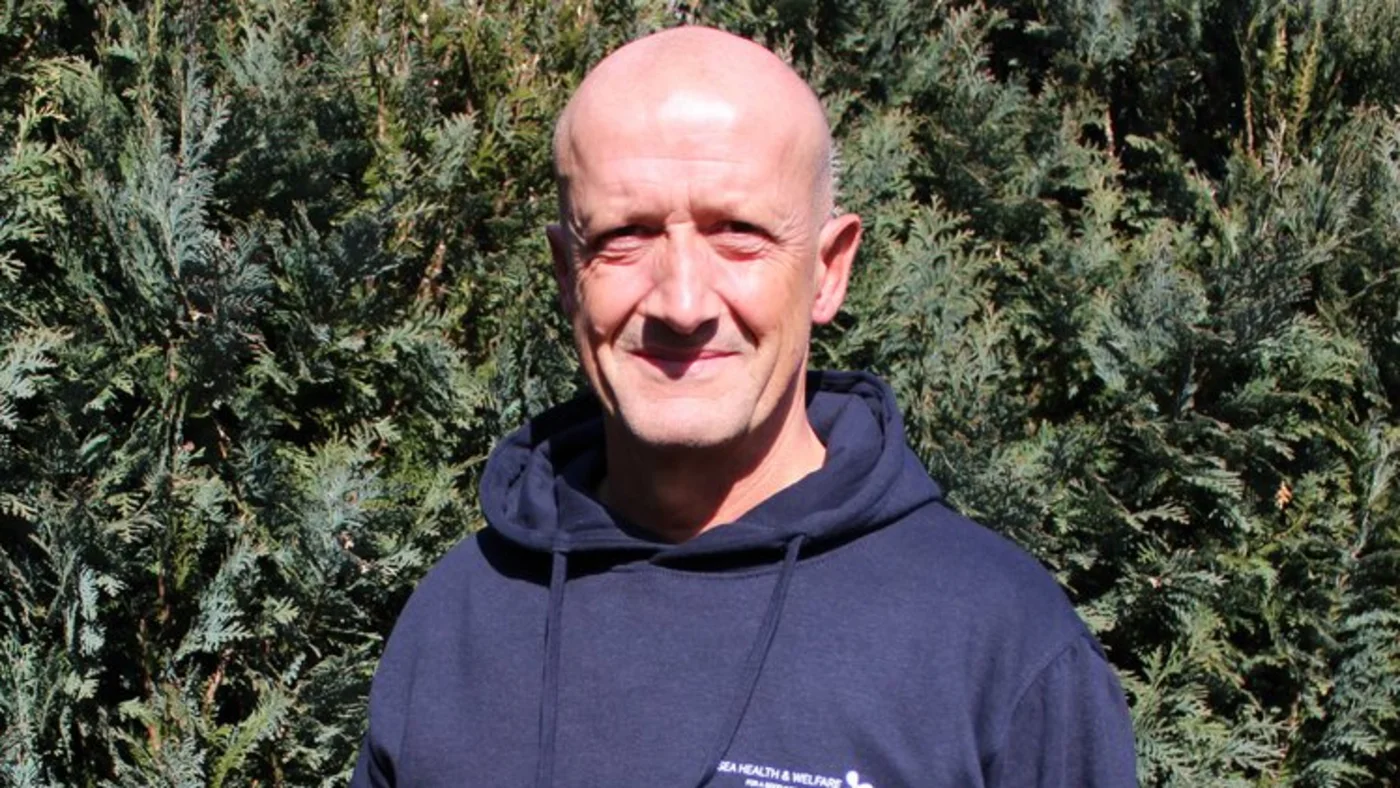
”It is important to recognise that we are a group of people from different cultures and that we are motivated by different things. For instance, Filipinos enjoy singing and activities in which prizes are at stake. We all like food from our home countries, so that is also something which we prioritise when celebrating festivals,” he says. The captain stresses that the strong social community on board is the achievement of the entire crew, and that chief engineer Michael Thinnesen is instrumental in implementing many of the physical activities aboard the ship. These tireless initiators are a great boost to the community. (Meet Michael here).
Throughout his working life, Jens Heri Bolstad Mortensen, who went to sea when he was 15 years old, has sailed on ships characterised by what he describes as a slightly old-fashioned approach.
”We spent a lot of time alone in our cabins watching video because no one took the initiative for social activities. I always thought that, once I became captain, things should be different. As captain, it is my job always to be positive and open to the crew’s suggestions for social activities.”
The only time Jens Heri Bolstad Mortensen has been reluctant to immediately approve of an activity was when a spontaneous swim in the sea was suggested.
”I was a little reluctant due to the risk of sharks, but we found a solution involving launching a lifeboat and a life belt. They really enjoyed that activity,” he says.
DAN SABIA receives a lot of support from the shipping company – also for activities such as golf on deck and swimming in the sea that otherwise might have been turned down. Senior crewing manager fromKNOT Management Denmark, Bo Hauge, explains:
”In general, we facilitate all welfare re- quests that we receive from our ships. It is important that these requests are made at the crew’s wish, and not thrust upon them by the shipping office. If we compare the cost of, for instance, a table football table or a fitness machine to the importance of creating welfare on board, the cost is very low. All those small things contribute to well-being and help counteract the loneliness that, unfortunately, is a globally rising problem within the shipping industry.”
It is of great value to the shipping company that the crew wishes to be part of the community on board. Bo Hauge explains:
”We mainly employ people who also wish to engage in the social life on board – we know that mental health is just as important as physical health. Among other things, mental health is facilitated through social relations and through being able to communicate with those at home, day or night.”
The shipping company sees it as one of its foremost duties to ensure its workers’ well-being and ability to perform at their best while on board.
Great demands are placed on the offshore industry with focus on protecting the environment, marine environment and safe navigation.
”People should return home to their loved ones in the same good state, physically and mentally, as when they signed on the ship. Our slogan is ’We are committed to safety’ and we take that very seriously.”
A good welfare ship promotes community, mental- and physical well-being, prevents social isolation and involves everyone on board.
The winner gets to choose a prize at the value of DKK 5,000. Read more about it here.
In 2020, 11 ships participated. They were: ADRIATIC GAS, ANNA KNUTSEN, DAN SABIA, GRETE MAERSK, GIJON KNUTSEN, MANCHESTER MAERSK, MILAN MAERSK, ORASILA, TERN SEA, TORM LAURA and VUOKSI MAERSK.