53% of people dying from work-related diseases die of cancer, according to a study by the European Agency for Safety and Health at Work from 2015.
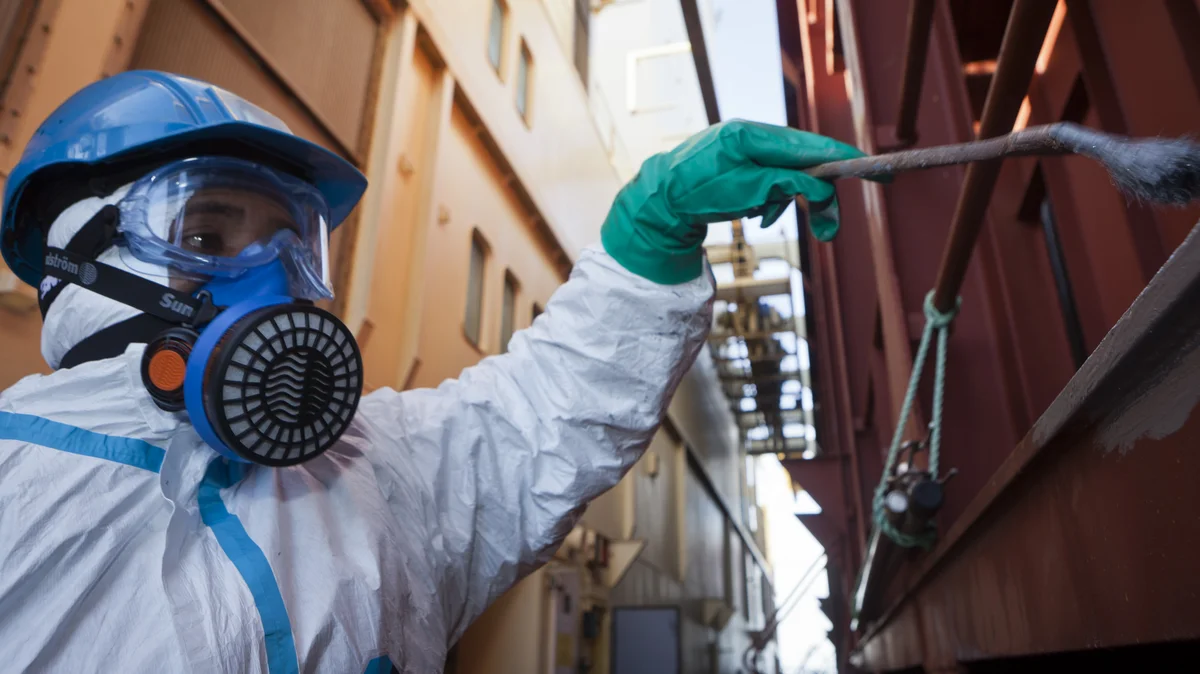
As a seafarer, there are several work situations where you can be exposed to cancer-causing chemicals or be compelled to work with them. The dangerous chemicals are found in paint, oils, vapour, gases, or aerosols in the air – for example during loading and unloading. In this article, Senior Consultant Anne Ries, who specializes in the physical work environment and chemicals, will tell what you can do to reduce cancer-causing products onboard.
First, take a look at where the cancer-causing chemicals are.
At SEA HEALTH & WELFARE, we find that more shipping companies want to focus on how to limit cancer-causing chemicals on board. And with the numbers from the European Agency for Safety and Health Work in mind, there is more than one good reason to make an effort; there are human lives at stake. Also, the Danish Maritime Authority chose to put extra focus on the topic in their annual surveys in 2020 of Danish passenger ships.
“With cancer, it can take up to 40 years from when you are exposed until you get ill. Not everybody who has been in contact with cancer-causing chemicals develops cancer; it comes down to how much you have been exposed to it. The more one is exposed, and the longer the time, the higher the risk,” Anne Ries explains and continues:
“When working with cancer-causing products, it is important to be aware that you are working under an increased Prevention Principle. That means you have to do even more to prevent dangerous situations compared to working with normal chemicals. This means work with cancer-causing chemicals has to take place in closed systems and there has to be an alarm on the ventilation system. It is very important because we don’t know how little exposure it takes to develop work-related cancer.”
Anne Ries encourages crews to increase their attention to cancer-causing chemicals by going through the ship – from top to bottom – to clarify where the cancer-causing chemicals are.
“Can you avoid using the dangerous products? Can you use some that are less dangerous? Can you split the dangerous jobs between more people? Can you clear the work area so that the people who are not working with the chemical do not get exposed to it and avoid dangerous vapours? Can you minimize the time you use the product? There is a long list of alternatives that you can look into,” Anne Ries says and elaborates:
“You always have to make a risk assessment to clarify how dangerous the product is and how big the exposure will be – such as skin contact or inhaling. How can you prevent the exposure? Remember to use the STOP-principles. Is it justifiable to use the product? If not, then you have to look into what other precautions to take or use alternative products. After that, it is very important that you follow up on your action plan. It is very important to focus on both training and instruction.”
Because there are no studies of how little exposure can lead to the development of cancers, and because it differs from person to person, it is very important to do everything possible to reduce the exposure time for dangerous chemicals.
Anne Ries also encourages the crew members to help each other focus on the everyday situations where one can be exposed. You might not think of those situations as especially dangerous, but they can be in the long run. They might be passive smoking, smoke from the galley, or exposure to the sun. In loading and unloading operations, there are diesel fumes on passenger ships and Ro-Ro ships. Or there might be fumes and dust from a chemical cargo.
“Make sure that the ventilation on car deck is working and running in the best possible way. Wait with other tasks while loading and unloading, so you avoid others getting exposed to smoke and vapour. Help each other to remember that it is important to minimize the time motors are running on deck. Do not eat or drink on deck even though it is easier to stay there for a single cup of coffee”, Anne Ries says and adds:
It is the workplace that has the ultimate responsibility for the work environment and safety on board, however it is equally important that the individual, the safety organization, and ship management constantly pay attention to what cancer-causing chemicals are onboard. Everyone must have procedures that reduce the risk of the crew being exposed to dangerous chemicals and products, Anne Ries points out.
There are several options to increase efforts with support and guidance from SEA HEALTH & WELFARE: