Michael, how have you experienced the initiatives in Ultraship?
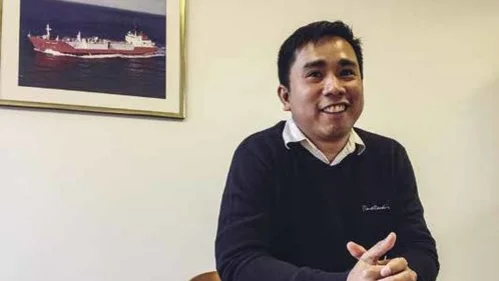
“I was invited by the company to become a ‘safetyambassador’. That means I will spend some months in the office at shore and share knowledge about everyday life at sea. It also means I will get to know more about the challenges that the office has when communicating with the ships. I was elected because safety always has been a key priority of mine. Ever since the first trainings I received in the Philippines where I am originally from, I have always been very keen on safety. It can be a risky job to be a seafarer, so it is crucial to work for a company where safety is taken seriously. If safety is not prioritised by the company, it is not a work for me."
How have you experienced safety culture during your career at sea?
“During one of my first employment as a seafarer, I experienced colleagues who didn’t wear proper PPE, ex. when cleaning tanks. I pointed it out to them, but they didn’t really react to it. When I brought it up to my superior’s attention, it was not received well. Then I understood why my colleagues had not said anything. Later, when the company asked to renew my contract, I said ‘no, thank you’. To be honest, it is difficult to fight such a culture. If I stayed with that company, I am afraid that I would become like them. Not caring about my own and other’s safety. My only option was, therefore, to leave ”, Michael explains.
How have you experienced the safety culture in Ultraship?
“There is something quite unique working for a Danish company. I experience a lot less hierarchy. I like that. When my colleague who is a chief engineer and I started here as safety ambassadors, we experienced that our opinions mattered. We are not used to that. Especially in the Philippines, there is a high workplace hierarchy. You can’t just approach a CEO as an example. Here, I felt I could raise my concerns anytime. And I can see that the company takes my concerns seriously. Working here also helps me understand Danish work culture better. You Danes can sometimes be very frank. I have experienced that in, for instance, email communication. Before I started working here, I was not comfortable giving my perspectives because of this frankness. Even though I knew I was right but I didn’t want to disappoint anyone. And that compromises safety. But by building a closer relationship with my Danish colleagues in the office, I feel more comfortable speaking my mind of how that message is received and what should be done differently. ”
How do you close gaps in the communication in practice?
“These days, I work both at shore and at sea. I communicate the topics we discuss here in the office to other seafarers when I visit the ships. You can say I am sort of a link between the office and the ship - and between cultural differences. This is because many of the crew members are from the Philippines. So, some of the cultural challenges we experience are alike. Once I go back sailing this communication will continue. It is important that all crew know that they must speak up and know that in the office is a person you can talk to. Knowledge sharing is highly important to me. I spend a lot of time sparring with my colleagues on the ships. One of the reasons why it has become so important for me is to address a misconception of Filipino seafarers. That is the perception that Filipino seafarers are not that great seafarers. Something that I, unfortunately have experienced at shore and at sea. So, I use this opportunity to do everything I can to change this perception by sharing the knowledge I get. ”